
The Rise of Interactive Video Foundation Models
The AI landscape has shifted dramatically from text prompts to full spatial world models. Google DeepMind's rollout of Genie 2 and Genie 3 demonstrates that autoregressive neural networks can generate 720p 24fps interactive environments directly from action inputs.
Instead of rendering 3D polygons, these world models predict the next video frame based on keyboard and joystick inputs. This represents a monumental leap toward artificial general intelligence (AGI) and spatial simulation.
The Latency, Cost, and Memory Decay Bottleneck
Despite jaw-dropping visual fidelity, pure diffusion world models face three critical challenges in real-world deployment: extreme computational inference costs (requiring high-end data center GPUs per player), noticeable input lag (exceeding 200ms roundtrip), and memory decay.
In models like Decart Oasis and early Genie iterations, turning your camera 180 degrees and turning back often results in the world morphing or forgetting earlier objects. For competitive platformers, speedruns, or persistent multiplayer worlds, this lack of object permanence is a deal-breaker.
The Neuro-Symbolic Hybrid: Why Voxel Engines Win
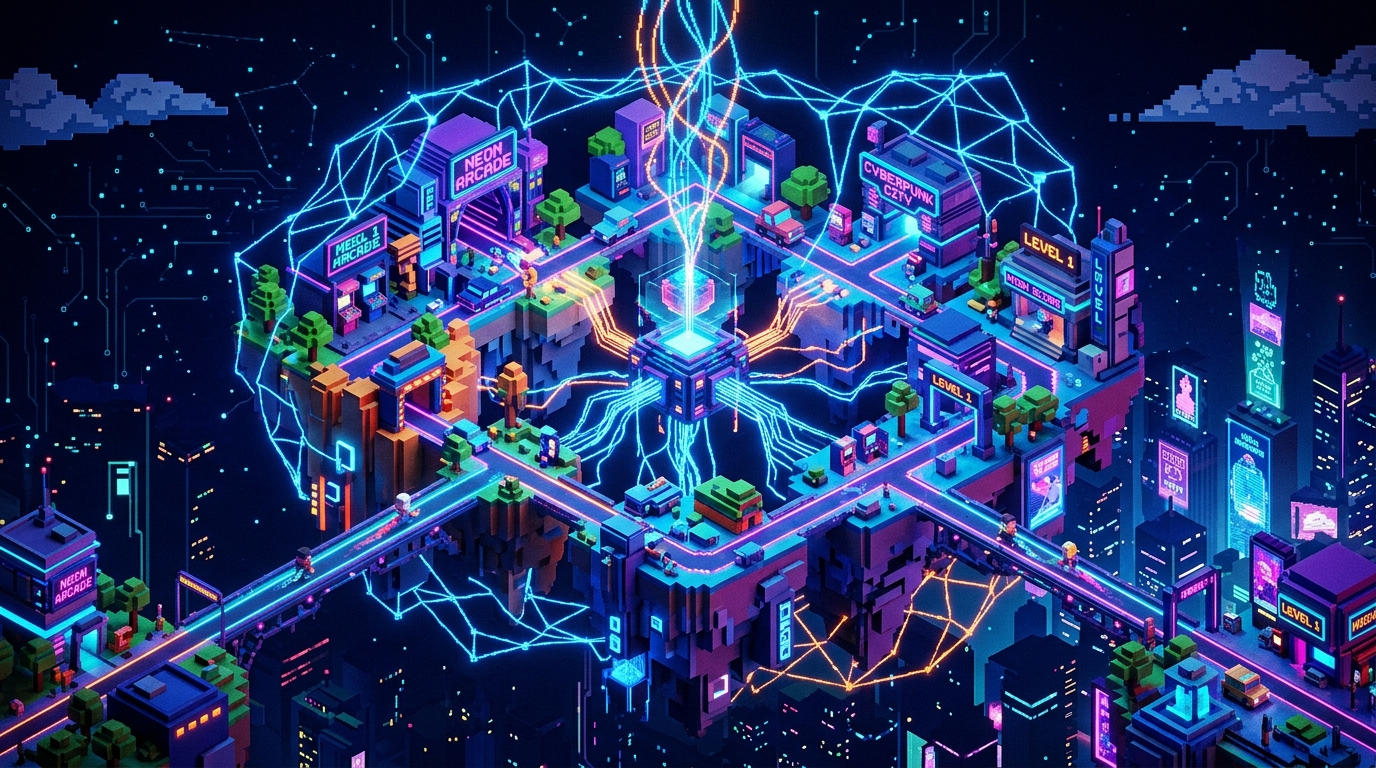
This is where modern platforms like Gamoji AI Studio take the winning architectural approach: the Neuro-Symbolic Hybrid. An LLM acts as the creative architect—parsing natural language intent into deterministic 3D spatial voxel heightmaps and collision matrices in under 3 seconds.
The player's local GPU then executes the game using lightweight WebGL and deterministic physics at 60 FPS with sub-15ms input response. You get the infinite creative magic of generative AI without the multi-dollar-per-hour streaming bill or blurry frame hallucinations.